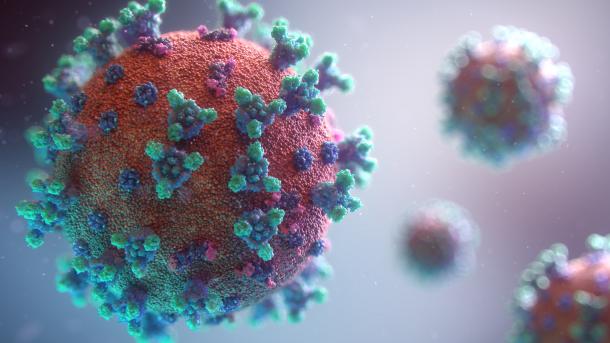
COVID Resurgence: What Now....?

COVID-19 in its earlier waves was one of the biggest troublemakers in the industry and beyond. While it affected worldwide health, it also contributed to worldwide trade deficits. Now that COVID is back with its new strain in China and several other nations, it's high time that we must decide how to counter and fight this pandemic. Now is the time when rules must be laid, and additional care must be given so that these rules are not affecting the seafarers in their service and thus not constrain the world trade. 


SEAFARERS Vs COVID: A WAR OF MANY TRADES 

Seafarers are one of the most exposed working class if we talk about the pandemic. Various countries involved in the shipping means that each route is a combination of stringent regulations against the spread of COVID, which sometimes prohibits necessary affairs in the maritime industry like crew changes and shore leaves. As one of the most important working classes, seafarers have to battle these regulations laid by the nations. 

There are some lessons we should take away from our previous experiences with COVID. As mentioned by IMO,

"At the height of the pandemic, some 400,000 seafarers were stranded on ships beyond the end of their original contracts and unable to be repatriated, due to COVID-related travel restrictions. A similar number of seafarers were stuck at home, unable to join ships and provide for their families".

To battle, this IMO previously created an entire team called by the name, Seafarer Crisis Action Team (SCAT), which worked in close conjunction with the International Labour Organisation (ILO), to help the seafarers who were stranded in international waters to reunite with their families. There are several case studies mentioned on the IMO's website in which IMO has laid several cases of such help and aid by the organisation. 


Keeping a light on these events, it is obvious that we need an international free portal where immediate help can be sought by both the seafarers and their families. Additionally, the shipping companies may also provide some services and may take some necessary steps to ensure a balance for the seafarers. Plus, the international community should come together to discuss this on an international stage and come up with decisions which can be followed globally. 

CONTAINER CONUNDRUM: WHAT CAN WE DO...?

Container stacking up on ports and ships making long voyages with empty containers just to ensure that the shipping industry is breathing is a situation which we have faced, which got escalated during the pandemic times. In an earlier post, we have seen How COVID choked the logistics industry. Go check it out, we can wait for sure...👀

There were times when over 20000 containers were sitting out in the international waters anchored in the ocean out of the ports for weeks. This not only delayed the logistics but also affected the mental health of the seafarers. 

One of the reasons for this is, the absence of small vessels which can also be processed at the smaller ports. As the economy is thriving the shippers are shifting to heavier vessels which means only bigger ports can be used and small ports shrunk in business. This, of course, has catalysed this and COVID only made it worse. We definitely to talk about this too.

SAVING THE INDUSTRY IN THE PANDEMIC 

We all need the shipping industry to be working and to be agile in these sensitive times. What we can do is simply provide the industry what it wants. There are certain changes required in the ways the industry works and we must get together in unison to provide it to the industry. Several maritime nations should come together and discuss viable choices and the regulations must be given some favours to the seafarers.  


CYBER SUSCEPTIBILITY: The Cyber Vulnerability of Modern World

Hello there...

The dawn of the 21st century witnessed the introduction of new IT wonders and from there the human world hasn't turned its back. Every industry has seen the increased efficiency after the addition of  IT factor. The Maritime industry witnessed a digital revolution changing its entire form and making it more reliable after the digital revolution. The Digitalization of the world has pushed us in an entirely new era. An era where data is of the utmost importance and value. 

Operating in a digital dimension has its own pros and cons. With ever-increasing digitization, the cyber attacks and world's vulnerability towards it, is also increasing hand in hand. Cybersecurity is currently one of the most discussed topic in the world. This time around, we are going to learn about the same.

CYBERSECURITY: WHAT & WHY 

Cybersecurity can be understood easily as the entity protecting the entire corporate ecosystem from the outside world, given the excessive dependence of the corporate world is on the data and its management. Cybersecurity essentially checks the blocking and theft of any sensitive data which has the potential to strategically affect the business and performance of the company or organization. 

In March 2021, The Italian Society for Cyber Security published the Clusit 2021 report, affirming the fact that 2020 was the worst year ever, in terms of the cyber attacks and most affected industry was the healthcare industry. The cyber attacks have increased by 12% when compared with the Clusit report 2020 encompassing the cyber attacks of 2019. 

In nearly all the Clusit reports published over a period of 5 years by the Italian Society for Cyber Security, it has been observed that 80-90% of the accidents in the cybersecurity have a little contribution of human negligence. For instance let us take the example of Petya or NotPetya virus which struck the shipping giant Moller-Maersk and shook the whole maritime fraternity. The virus took computer systems as hostages to ransom money from the company. It has also attacked the companies like Saint Gobain, American Pharmaceutical company Merek sharp and Dome and Chernobyl Nuclear power plant in Ukraine. 

Symbol of Petya Virus
Source: Wikipedia 

This shows that there is a utmost requirement that the industry professionals and the employees must be aware of such attacks and how to cope up with them.

BASICS OF CYBER-SECURITY:

Before marching into the topic of cyber security, it is necessary for us to be well aware of the social engineering which is essentially the study of the psychological techniques of Human behavior. Using the ideas extracted from this social engineering, attackers attack and steal information through different possible methods.

There are a number of methods used for attacking any company or its employees. Some of them vastly used are mentioned here:

1. PHISHING 

Phishing involves convincing people to provide sensitive information on the internet. Phishing social engineering the attackers exploit the people on there aspect of trust and Helping Nature and receive them for or extremely sensitive information like passwords and transaction information. 

The activity is mainly done through emails and malware programs. An attachment sent through a mail can inject ransomware comma Malware and Trojan software air is a computer device so as to infect and does retrieved information. Whereas sometimes coma infectious links can also be sent by the scammers Who are disguised as company. Most of the times they are disguised as fake banks and merchandise websites.

2. SPEAR PHISHING 

Spearfishing on the other hand is more organized. In this case attackers attack on specific target and gain access to the sensitive information about any organization, its intelligence, investor information and other significant data that can either be sold or be used to harm the business. 

Spear phishing attackers mostly attack the mobile devices as these devices are more prone to 'clicking links and subscribing to things' ideology. After clicking the link and some password typing, a profile of the attacker is made on the device which gets access to all applications and personal information which can then be sent to the attacker.

3. WHALING 

Really is quite similar to phishing and Spear phishing. Here the attackers attack on the high profile personal in the company to retrieve sensitive information and sometimes ransom as well.


4. SNIFFING 

Sniffing is acquiring the data illegally while its transit from the sender to the receiver. The act of sniffing does not harms any computer system but it transfers the data which can be sensitive to the darker you can use it to harm the business of the company. 

5. SPOOFING 

Spoofing can be termed as cheat for theft. Cheating is a kind of activity which is as old as the human existence. In the act of spoofing a person claims to be an employee of a company but he or she is not. Similar can be in the case of website for applications as well. Any application or website can claim to be the official application or website for any mi company but in case of spoofing the application or website is a trap for the less aware people.

Spoofing can be done in following ways: 
  • Email Spoofing
  • DNS Spoofing 
  • IP Spoofing 
  • DDoS Spoofing 
  • ARS Spoofing 

ANALYSIS & MITIGATION 

The mitigation of the cyber attacks is the proper education and implementation of Risk management program in the respective industry. A proper Risk management system determines the policies as rules and regulations to be followed so as to mitigate the risk of cyber attacks. 

A Risk management program is calculated using 3 factors namely Threat, Vulnerability and Impact. 

Threat is a potential cause of accident. It may include flood, fire, human unawareness and breakdown of the computer system. Whereas vulnerability encompasses the weakness of the management system. And the impact factor determines the actual damage caused in the cyber attack.

A cyber attack is usually done with an ambition which may include: 
  • To hamper the reputation and stature of the organization 
  • To use resources of organization 
  • To show off the hacking and attack skills 
  • Automated random attack through worm and viruses. 
An attack simply affects the entire mechanism of the system and thus affects the entire business and working of the company. To protect such mishaps sensitive information in any company must be confidential, editable and available for the authorized personnel only.

THE RESPONSE OF IMO FOR CYBERSECURITY

International Maritime Organization, after acknowledging the threat of cyber security made it a necessity that the Security Management System (SMS) should adequately address. This was addressed to be done in the Security Management System by the first annual verification of the company's compliance document after the 1st January 2021 (Art 2). 

IMO then published a document enlisting its guidelines on the maritime cyber risk management which consists of recommendation addressed to all the organization in Maritime sector to encourage the cyberspace security management practices and to safeguard shipments from cyber threats and vulnerabilities. IMO also identified the most vulnerable systems including:
  • Information systems of Cargo
  • Electronic Navigation
  • Communication systems
  • Information regarding the passengers (in cruises)
Not only IMO but also, associations like Baltic and International Maritime Council (BIMCO), Cruise Lines International Association (CLIA), International Chamber of Shipping (ICS), International Association of Dry Cargo Shipowners (INTERCARGO), International Association of Independent Tanker Owners (INTERTANKO), International Union of Marine Insurance (IUMI), Oil Companies International Marine Forum (OCIMF), published the document titled, 'The Guidelines on Cyber Security Onboard Ships'. This document mainly focuses to aware the industry professionals about:
  • Identification of threats. 
  • Identification of vulnerabilities in the ship's information security system.
  • Maritime cyber risk assessment.
  • Detection of threat and minimizing its impact.
  • Establishment of contingency plans to reduce the incidence of threats.
These recent developments shows the increasing awareness towards the Cyber risks in maritime industry. Now IMO identifies the Risk management as -
"The process of identifying, analyzing, accessing and communicating a cyber related risk and accepting, avoiding, transferring or mitigating it to an acceptable level considering costs and benefits of the actions taken to stakeholders."

CONCLUSION 

The cyber based dimension is a good friend and a bad foe. On one hand it has provided us the non-limiting opportunities to learn and express. With a single mobile device, a person is connected to the world and its happenings. One can avail the world-class education sitting in an entirely different continent. On the other hand, it has also increased the scams and thefts and that too on an international levels. Overall, cyber-space is boon when used correctly and a curse for the world, when in the bad hands. 

The world can only be aware and educated of the threats posed by the Cyber-attacks and its severity. 

Hope that you enjoyed the article. Please mention your views in the comment section.

THANK YOU FOR YOUR VALUABLE TIME...

"Our best work is done, our greatest influence is exerted when we are without thought of self." 
- Swami Vivekananda  
A FUTURE LOST IN HISTORY: Saunders Roe Princess

Hi there! 
It's been a while, I haven't posted anything new. But the topic which I am writing about, is so intriguing that I can say sorry for the delay. Please hold tight as we are going to read something magical. 

THE GENESIS OF SEA-PLANES 

The WW-II marked the important era of revolution in the manufacturing and development of the new industries, also counting the Airliner industry. But at that time there was a lack of airstrips and airports, which were (at that time) grass and dirt type. This fueled an option of seaplanes.

Source: Wikipedia

The starting was normal, some small planes and some with designs on the table. In 1943, one such design was made, which had a formidable space to carry more than 100 passengers and can fly at a good speed of 545 km/h. But due to high time at the WW-II, the design was pushed into drawers as an under-priority thing. 

Source: TravelUpdate 

But after WW-II was over, that design was going to make history, or better said, to register a name in pages of aviation history.

THE HISTORY IN THE MAKING 

The design was taken over by the British aviation company of that time Saunders-Roe. They successfully constructed the model and launched it. The model had a 2-level cabin that could accommodate over 100 passengers and can fly at speed over 600 km/h. The plane was capable to fly at a height of 39000 ft. and was able to traverse a journey of 9000 km. At that time it was a wonder. The wonder had a name, as royal as its qualities were, the Saunders-Roe Princess.


Source: Historic Wings 

Princess, had restaurants, resting lounges, personal bedrooms, and common rooms for the 100+ passengers, accommodated in the plane. The facilities were sound, giving an experience of life to all the passengers. It was equipped with the new technologies of that time, like Turbo-prop engines. The Saunders-Roe Princess had 8 counter-rotating turboprop engines, and 2 single propeller engines for a backup.

The expectation of the company, Saunders-Roe was too high for the seaplanes. They even proposed a similar approach for fighting jets, which could land on the water safely. And also advertised the Princess in almost every corner of the world. For the next few years, Saunders-Roe Princess was the center of attraction, in all the air shows. 

THE REJECTION AND AFTERMATH

The year 1952 marked the dawn of the Jet airliners. Companies started booming in manufacturing and competition. The Saunders Roe Princess, was also racing for recognition and world scale advertisements.

The companies never showed their interest to the Saunders Roe Princess, rather they showed their belief in the Jet liners manufactured in US. The BOAC the biggest airliner company at that time in the United Kingdom, also showed no interest in the Sa-Ro Princess. 

After the WW-II ended a lot was changed. The airstrips were now very common all across the world. The flying objects mainly used were land based planes like Boeing B-17 bombers. 

A B-17 Bomber 
Source: Wikipedia
The abundance of airstrips were not the only reason. There were some economic reasons too.

THE REASONS OF FAILURE 

The Sa-Ro Princess was a giant. Since it had to take off from water, the power needed for takeoff was much more than that of land based Jet planes. Apart from this the hydrodynamic fuselage was also a reason. The hull of the Sa-Ro Princess was provided with pressure control systems which needed maintenance from time to time. Also the body of the plane required regular outer maintenance, as it spent some of its time in saline water. 

Although the company tried for advertisements but, future never arrived for this future plane and eventually it was placed in the garages of Saunders Roe, in UK for long term storage. The engineers of Sa-Ro Princess, believed in another way. They thought that Sa-Ro Princess had not to compete against the Jet airliners, instead Sa-Ro Princess could easily outplay the ocean liners at that time. The company made another superior model by the name of Saunders Roe Queen.

The Sa-Ro Queen 
Source: Wikimedia commons 

Sa-Ro Queen, was undoubtedly a giant planned to compete with the Ocean liners of that time. A football field long 5 deck plan having a capacity to accommodate 1000+ Passengers, with 47 crew. The giant was planned to have 24 Jet engines, 12 on each sides. But this giant never came out of the table. This was due to its economic feasibility. An cruise liner is much more economic than a flying giant with a 24 jet engines. Even Saunders Roe had no way to start the construction of that, due to shortage of money. 

THE FATE OF SAUNDERS ROE 

Source: Wikipedia 

Sa-Ro Princess was undoubtedly a good start for the company with a special ambition. But the failure of the company to convince the world market, pushed it to gradually change its way of approach. It merged with Westland Aircraft, and started its engineering in Hovercrafts and helicopters. Finally in 1964, it ceased all the operations. 

Sa-Ro Princess after the rejection, several times was thought as an option for cargo transfer and even for nuclear powered operations. But, this never happened in the real space. The flying boat was eventually scrapped and sold. 

THE CONCLUSION 

The period of WW-II, was a period when a lot of innovational ideas were fueled. Some were successful, some were a failure. But all had one in common. It forces us to think, how the last 70 years have changed? Instead of fueling innovation we are stuck in the comfortable living. 

"Be willing to step outside your comfortable zone once in a while, take the risk in life that seem worth taking."

- Sir Edward Whitacre Jr 

RESURGENCE OF PIRACY: THE SOMALIAN PIRATES

Hello There!

With the advent of trade and commerce in the world, there has been a rise in several other activities hampering trade and commerce. Piracy is one of them. Generally, when we hear the word pirate, we think of a personality with hook-hand and eye-patch but the modern-day pirates are much more developed and technology supported. When researched one can easily say that the pirates have a total network of attackers, negotiators and local investors who fund them for the vital resources required for the pirate activities. Today we are going to learn about one of the most famous modern pirates of which many companies are afraid due to losses. We would learn every aspect and at the end comment what do you think about the same. Interested, let's dive in!

HISTORICAL ACCOUNT OF SOMALIA 

Somalia was colonised by the British and Italian governments when they arrived in the horn of Africa region. In 1940 during World War II, Italian East Africa invaded the British Somalian region to gain control over the area. Eventually, British forces regrouped in Kenya and then again invaded the Somalian region. Consequently, the area was acquired by the British. After the formation of the UN, it gave the British government, total control over the British Somali region and at the same time Italy received trusteeship of the Italian Somali region. But it was mentioned that within 10 years Somalia would be independent. In 1960 after all the wars and changing governments, Somalia became an independent country. The government of Somalia was doing well until the president was shot dead in 1969. Following this, Mohammed Siad Barre, a military person formed the Somali Revolutionary Socialist Party (SRSP). This started the military rule in Somalia. The following events also saw the rise of left ideology due to the interference of foreign left personnel like Nicola Chojesku, Romanian left leader. 

SOMALIA ATTACKS ETHIOPIA

In 1977 Somalia under Barre, invaded Ethiopia. Many powerful countries like the USSR and Cuba supported Ethiopia, resulting in the complete disband of SRSP in 1980. Following this, there were several new parties formed like SNM in northern Somalia, which also invited internal riots and eventually the Somalian Civil war in 1988. 

Wikimedia commons

The political instability also resulted in chaos everywhere in Somalia and finally in 1991 the barre government was deposed. The northern Somalian region declared itself independent (although it is not accepted yet) and the southern region was war-stricken.

RISE OF PIRACY IN SOMALIA 

Somalia lies in the Gulf of Aden region which is an important route for several fishes like Tuna. In the absence of any government, there were no Navy and coastal guard. This absence of administration invited a lot of foreign fishermen to catch fish illegally from the region and also big ships to dump harmful chemicals overboard. This caused huge economic drawbacks for the Somalian fishermen as the Fishes were killed by the chemicals. To revive their livelihood they opened their own association called Badaadinta badah which when translated in English is Saviours of the Sea. They started attacking the foreign fishermen to stop the illegal fishing in their region.

NRDC

In early 2000, they also realized that the Gulf of Aden is also one of the busiest routes for Cargo ships and Oil tankers. They found that huge international attention can be taken by boarding up these ships and taking them as a hostage to receive ransom from the shipping companies. This eventually turned the militia coast guards of Somalia into Pirates. The business of piracy, for these people, was much more profitable. Therefore many criminals and young people (mostly from Southern Somalia) also started earning profits from piracy. 

INCREASING THE LIMITS

Le Figaro

The earned profits can be understood by the fact that when they boarded a ship in 2005 they received a ransom of $315,000. Which exponentially increased in the upcoming years. In 2007 they boarded and ransomed a ship for $1,500,000 and In 2011 a ship for $6,000,000. A study shows that the total ransom till 2009 was $58,000,000 which increased to $238,000,000 in 2010. Such a large sum of money for a War-torn, Famine-stricken country was not less than a boon. Every year many ships were now attacked and the crew was taken hostage and the ransom was asked to deliver. Soon the Somalian Pirates increased their range to 1000 kilometres from the Somalian coast as they saw the whole Indian Ocean as their battleground.

ATTACK METHODOLOGY  

Usually, there is always a mother ship and two or three smaller ferry boats that are used to attack the huge cargo ships or oil tankers. For the Somalian Pirates, the cargo is not important they only take the crew as a hostage for ransom.

Seanews turkey

The funding and weapon arrangement is done by the local investors who buy a share and earn millions alongside these Pirates to facilitate this. There is also some debate over the Association of this pirate community with the Islamic Association of Al-Shabab, residing in the southern region of Somalia. One of the primary founders, with the increase of this Piracy the local fishermen of Somalia, are now facing peril. They are now driven out of the picture by the rich and powerful Somalian Pirates. 

THE WORLD RESPONDS

2010 was the Heyday period for the Pirates, in which they earned a lot of money as ransom and also attacked every second ship for ransoms. But this also started the downfall of the Somalian piracy as several Naval Associations across the world, formed a task force specially designed for handling the Somalian Pirates. 

Deccan Chronicle 
There is also the construction of a naval base in North Somalia and also a Coast Guard at the Puntland. These steps essentially have lowered the speed of piracy considerably in the Somalian coastal region, but hasn’t yet stopped it. In 2013, the total piracy activities were decreased by 90% in total. But in recent years, it is again regaining international concern. In 2017, they held a crew hostage for ransom but soon released them. In 2020, they have attacked several ships (largely unsuccessful) for ransom.

The Task Force has to follow the Somalian laws and can not enter the coastal region thus when kept hostage it is really difficult to infiltrate and save the hostages. Also, the pirates caught can not be interrogated and executed anywhere. The caught pirates are safely taken by the naval boats to the Somalian coast. Therefore the total control can never be achieved over the Somalian pirates.

WHAT CAN BE DONE?

After looking into the total account of Somalia we can understand how badly the social, political and economic instability affects the nation. The steps taken by the companies and the naval organisations can have a check but can never stop this from happening. There is only one thing which can be done. Providing better education, better skillsets and most importantly employment to the youth of Somalia.

What we see in Somalia is just an outcome of what is going on there. The opposite can also be done all that we really require is basically better education, better professions and better central government. No weapons or threats can stop these pirate activities from happening, only the proper education and a strong central government can establish peace in the country of Somalia.

It is truly said by Nelson Mandela that -

"Education is the most powerful weapon which you can use to change the world..."


THANK YOU FOR READING !


THE ISLAND FROM THE PAST: North Sentinel Island

Hello there!

The North Sentinel island is located in the archipelago of Andaman and Nicobar Islands in the Bay of Bengal. The place has got its fame from the fact that the people here are still living in the Stone Age. Not far than 50 kilometres from the same place is the capital of Andaman and Nicobar Islands Port Blair, which is a developing city. It seems very interesting that under the range of 50 kilometres, there can be two places one being a major city and another being at a Stone Age. The same interest is the reason for the article today. 

Vajiramias.com

The island is home to the Sentinelese tribe which moved from Africa to the North Sentinel Island nearly 60,000 years ago and were among the first African people to migrate from Africa. The fact that these people were among the first to migrate, is established upon the basis of two facts:

  • Turtles are afraid of the island and don't visit there. It has been approved from studies that it takes 10s and 1000s of years for turtles to develop this awareness of hostility from a place. This supports the fact that North Sentinel island is the home to the tribe for a very long time.
worldwildlife.org
  • During the British rule, the British administration tried to develop communication between Jarawa, Onge tribes and the Sentinelese tribe. They all had similar painting styles and had been there for years. But due to the long period of time elapsed the language gap was developed and both the languages of tribes had nothing in common. This also depicts that they have stayed there on the island for many years. 
REMARKS AND VISITS TO THE ISLAND

The island has a lot of remarks from the past. In his own words, the 13th century Explorer Marco Polo said that “They are very cruel and kill and eat every foreigner whom they can land their hands upon.” There have been several attempts intended or accidental to establish contact with the Sentinel people. The first of the contacts include the 1867 shipwreck of Nineveh, an Indian Merchant ship that ran aground on Sentinel island and was attacked by the Sentinelese. They were eventually saved by the British patrol forces. Following this event in 1880, a British administrator, Morris Vidal Portman, brought 4 natives from the Sentinel island to the Andaman and Nicobar Islands to study end communication. Soon the elder ones (among the brought people), died due to the exposure to germs and pathogens. Fearful of this, Morris returned the children back to the island. And that was the last time one could do it because after that everything which approached the island was attacked from the Island. After a century passed, in 1977, a ship MV Presely, ran aground and just after four years in 1981 a freight and passenger ferry and operated by Transeuropa Ferries, MV Primrose Struck the island. 

Fellowprimo

The crew members of both the Ships were eventually saved. Furthermore, Contacts include the visit of Belgian King leopard III in 1975, who was also attacked by one native resulting him, in fleeing away from the island.

FRIENDLY- INTERACTIONS

thetimes.co.uk

After all these events there has been a proper friendly encounter with the Sentinelese people. In 1991, the Indian government sent many anthropologists and researchers along with doctors and other enthusiasts to the island. They went alongside some people of the Onga tribe. They gifted several coconuts to the Sentinelese people. This was the only friendly interaction that has been done with the Sentinelese people.

THE 2004 TSUNAMI AND THE ISLAND

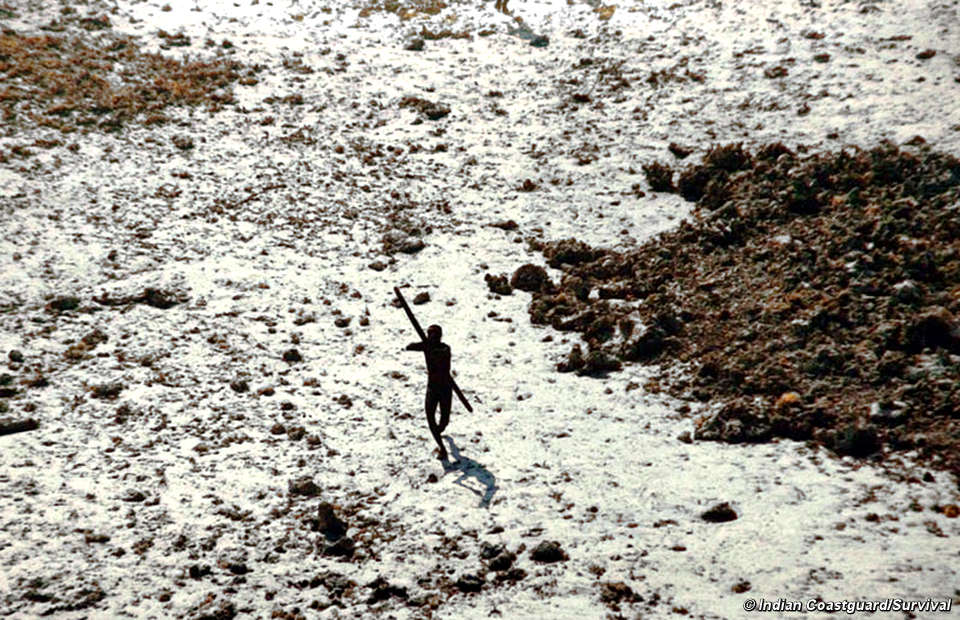
In 2004, A Tsunami broke out in the treacherous waters of the Indian Ocean. This tsunami caused a series of devastations in the Andaman and Nicobar Islands. A lot of cities were affected causing the loss of properties and assets. The Indian government sent helicopters and drones to the North Sentinel island, to review the conditions and the loss that happened at the Island. It was believed that the tsunami would have wiped out the Sentinelese people. When the helicopter reached above North Sentinel Island, it was attacked by arrows and sticks from the natives revealing the fact that they were alive and active.

Survival International 

One of very intriguing discovery that was made in this 2004 helicopter visit came from the arrow which got stuck in the helicopter. the arrow was studied and it was found that The tips of the arrows were now made of iron rather than stone. This depicts the fact that the Sentinelese people have moved towards the Iron Age and have started using Iron as weapons. There was a good deep study and a fact was released that the ships MV Presely and MV Primrose have accidentally provided the Iron to the people which has started the Iron age at the Island. This is actually very interesting.

RECENT INTERACTIONS

Recent interactions have not been good and friendly with these Sentinelese people. In 2006, two drunk fishermen came nearer to Sentinel Island and were attacked and killed by the Sentinelese people. Their bodies were buried by the Sentinelese people which were retrieved by the Indian Government later. But this established the fact that these people are not cannibals.

The New York Times

Recently in 2018, an American missionary John Allen Chau was on an illegal mission to preach Christianity to the Sentinelese who got attacked and most probably killed by the Sentinelese people.  

CAN WE GO THERE ?

The answer is very simple and straight forward, No we can’t. The Indian Government has banned all sort of visits and tours to the island. There are several reasons for the same: 

•The hostile behaviour of the Sentinelese tribe. The past experience shows how much possessive they are towards any kind of visits. In these kinds of situations, it is better to just leave them alone. 

•Disease. It is an established fact that when European went to America more than 90% of American natives were diseased and several were killed by the European germs and pathogens. Since these Sentinelese people haven't been in touch with the world for 10s and 1000s of years, they have not developed the immunity for the germs in the world. Consequently, any pathogen attack due to foreign interactions may result in a total wipeout of the community of Sentinelese people.

•Right to be alone. The Indian Government also have stated that if the Sentinelese people want to live differently and away from this modern world then they must be given the right to do so. For this Indian Naval forces patrol the area for any foreign activities that can disturb the inhabitants of the North Sentinel Island.

It is truly said that the world is full of amazing things. Nobody knows when and where we can spot or find anything. We are very rapidly moving towards a new era every day, and with the new era comes new responsibilities. One of them is taking care of these faraway places. 

One must remember what Cheif Seattle said, 

" The Earth doesn't belong to us. We belong to the Earth."

Thank you for reading !


IMPACT OF COVID ON LOGISTICS

Hi there everybody! 

As we all know, COVID 19 pandemic struck us in 2019 November, starting its spread from the Republic of China and eventually affecting the world's largest economies and leaving behind several parts of our society "lifeless" whether we call it a human, properties and all other assets. Without expanding this, we all know millions have lost homes, money, jobs, and many lost lives. It affected not only the living things around us like of course us, but it also affected several businesses making them again a scratch to think upon. Winding up in a line, it severely affected us and our assets.

Talking about the assets the world depends upon the service industry for all the international trade and commerce. Therefore it can be called the largest asset that the world possesses. So, it will be interesting to take a look at the impact of COVID on it. That is what we are discussing today. We will look only at 'logistics', a mere part of the service industry.

Logistics, a part of the service industry can be called the very backbone of international trade and commerce, in the absence of which whole efforts of anything will visit the corridor of darkness. The importance of the same can be understood as it is the very bridge that links the markets to the firms providing the services, transportation, warehousing, and inventory management. Just for the sake of example, Apple's famous iPhone receives its components from 200 different suppliers spread across 43 different countries. This, in absence of logistics, is nearly impossible. 

So what basically happened that many countries across the world, applied the method of LOCKDOWN to have a check on the COVID cases. And this lockdown situation ramified in the absence of several workers at the ports, at the roads severely affecting the logistic industry. The Lockdown situation pushed many workers out of the Factories, out of the ports, and logistic centres. Thus creating a manpower shortage in the industry. This situation somewhat created a halt in the industry. A halt that eventually leads to recession.


Having well acquainted with the topic, let us move on to analyze the individual effects on the three pillars of logistics, which are viz. ocean freight, Airfreight, Land freight. Alone in china where the pandemic first attacked the data shows a 10.1% decrease in the total freight from the ocean. The ships were stuck at the ports due to slow processes because of less manpower. Another reason for the same was the Container conundrum. For which we will later make an article. 

Moving on to the next, the Airfreight received a massive shock as well. Alone in china, the total volumes received a downfall by 19%. The situations were similarly critical in every part of the world. Similarly, Land Freight received a massive shock and possibly the worst as it was in mid of the people. Several restrictions on the cargo and truck movements posed a serious threat to the land logistics services. Given below are some photos from India where the city blockades during the lockdown left the trucks in several mile-long queues. 


India was not alone, similar queues were seen in the European Union as well. A 37-mile long truck line was formed on the A4 highway after the Poland border was closed. 

HOW WE TACKLED IT 

In most part of the world, the governments reacted to this pandemic and its effect on logistics by declaring the ports, shipping and trucking industry as key workers. Indian government excluded the transportation of essential goods from the Lockdown restrictions. although many airports were closed and were not thus operating any passenger flights but the cargo transportations using airlines were continued in most part of the World. There have been discussions over some of the measures that can be used to increase efficiency and at the same time tackle the logistics. Some of them are listed below:-

  • The Companies involved in the Logistics have updated their safety protocols so that it help in overall performance at the logistic centres. Most of these includes the social distancing norms and other medical practices like thermal screening and regular COVID tests.
  • These tough times have also encouraged the companies to look up into the alternatives means of transports like using vacant railway tracks and passenger planes for the cargo transfer admist the lockdown periods. This surely a good move which ensure the continuous transfer and employment to the workers as well who were not able to earn their livelihood in the lockdown periods.

GOING DOWN THE HILL

The World has seen a lot in such a small period in the time of COVID. Different nations were affected differently but when it comes to the core, every nation has lost many assets and lives. As the saying goes, Every tunnel has some light in the end, world will eventually find the peace and health again. When it comes to future aspects it can be said that some of the factors are common in each country. Some of them are :-

  • Increase in cargo checks and security at each terminals and stages of transfer. There have been many updations in the past and even some are going at the present as well. 
  • Use of more Technologies and digitalisation in the field. 

With the technologies and researchers standing up to present their views, we will surely find a way out from the epidemic. 

"Optimism is the faith that leads to achievement. Nothing can be done without hope and confidence" 

                                                                                                                                              - Helen Keller


Sails as wings of ship

 Hi there!

This article will focus on the use of sails to power a ship. From the very beginning of shipping the principle way for propelling a ship was wind. The wind applied thrust on the sails and in return the sails powered the ship to move. But after the invention of engine the shipping shifted to them but still in some places sailing is done for leisure and as sport.


Now many shipping companies and enthusiasts are coming up to the option of using sail for wind propulsion of ships, reason being the need of decarbonisation of the emissions. There is practically no emissions because nothing is burnt whatsoever in this type of propulsion. 


Challenges 

The small ships can be powered by small sails but when it comes to mega ships they need sails high up to 95 m. This high sail restricts the movements under the bridge and also hinders the port operations. Also it can cause problem in the storing the cargo. 

SOLUTION 

For this problem many organizations like French shipyard Chantiers de l'Atlantique are coming up with ideas of retractable sails, which will be a composite made sail by carbon and steel. These sails will also be able to tilt and rotate to harness power from air. The tilting ability will help it to be able to pass under the bridges. This technology is called Solid Sail/AeolDrive.

Image credits:    cruiseindustrynews.com/


This concept will provide us ability to save fuels and reduce the emissions up to 50 percent. One of the ships under consideration is Oceanbird a transatlantic car carrier which will use sails fir propulsion and is still thought upon. 

This revolution in shipping will provide us the ability to propel our ships without any filthy emission. 

Hope this article satisfy and inform about the sailing in modern world.

"Dwelling in dream kills the present."

Thank you !


THE WHALE DILEMMA

Hi there ! 

Today nearly 80% of the total cargo transfer activity is done by maritime transfer. And this transference is proving to be disastrous for the WHALES.

Yes you all read it right. THE WHALES. Whales are one of the majestic fauna on Earth and they are really big. One of the biggest mammal Whale is negatively bouyant which means their density is more than that of water. Yet they are able to swim. Also to prey on there food they have to go deep down the ocean. And they dive to the depth of 500m sometimes. Then for their breathing activity they have to come up at the sea level. 

The whales sometimes when they come up, they collide with the ships. Now giving you all a rough idea of how big a ship is- nearly 700ft long and can weigh about 25000 tons . Such a heavy floating object with a good speed is just a nightmare for the whales. The collisions sometimes wound them and most of the times they get killed and since they are negatively bouyant they just get swallowed up in sea. 

Image source: www.savecoastalwildlife.org


This topic started when the whales started appearing on the sea shores and beaches dead. Whale researchers today believe the accidents are a lot in numbers and are growing rapidly. These are not in concern that much just because we don't see any floating whales on the sea level. 


After being hit they either go deep inside the ocean or only some reach the shore with the waves. Some researchers assumed the number of Total encounter of whale by ship to be 1200 in 5 years. But the whale enthusiasts seem to give different information. They think that the actual number must be 20 to 30 times more than this number. 

WHAT NEEDS TO BE DONE ?

Actually there hasn’t been long studies over this topics but in this particular blog we will try some of the potential solutions for the issue. These are:-

  1. As the whale are not able to see the approaching ships most of the time, it's our duty to save whales from collision with us. Probable solution can be diverting the routes of ship to remain away from the whale areas. This also reduced the collisions when practically applied in Panama region.  But this was only 90% decrease which is not enough as whales are one of the most slow reproducing animals. In thus rate they will be extinct.
  2. Second way is alerting them beforehand a Ship approaches the region. This can be done by introducing a device on ship that can pre locate the whales and if possible get away and if get approached by whale, emit sound wave to alert them. But this is not implemented yet.
This shows the whole situation. A head always has a tails in other side. Same thing happens with the shipping industry. 

Let's hope for a better future as always we do. And let's make Earth more livable and lovable.

"An unexamined life is not worth living"
                                                                      --   Socrates 


THANK YOU !

Nuclear-powered Marine propulsion

 Hi readers !

Its very difficult to stay away from you guys and I have prepared the topic as interesting as anybody would have want.

                   The topic that we will discuss about is Nuclear-powered Marine propulsion. As we all know the whole global commerce rests on the maritime shipping. In 2017 UNCTAD ( United Nation conference on Trade And Development ) marked it 10.7 billion tons. This heavy transfer ensures that the sea routes are always busy. These routes are such busy that even marking the number Of ships currently on voyage is very difficult. Maritime transport accounts for over 80% of world trade by volume and for approximately 3% of global greenhouse gas emissions, while it is also a contributor to air pollution close to coastal regions.

In response to this the maritime community is moving towards the alternative fuels. The immediate effect of introducing alternative fuels will be a strong reduction in SOx, NOx, and PM, while greenhouse gas reductions will also be possible, depending on what types of fuel are used. One of these options is the Nuclear-powered Marine propulsion.

It is rapidly gaining applause in the industry due to the high working efficiency of these engines. The fuel is durable and the power generation is also better than the old common engines. 

HISTORY

The Nuclear propulsion in ships was started by the US Navy by the 'USS Nautilus' a submarine, which was enriched with Uranium fuelled PWR ( Pressurised Water Reactor ). Continuing its legacy US Navy is currently the leader in the Nuclear-powered Marine propulsion. Given below is the US Nautilus.

Image source:  Google Images


Currently Nuclear-powered Marine propulsion is exhausted by 6 countries worldwide. They are 

  1. United States of America 
  2. India
  3. China
  4. France
  5. United Kingdom 
  6. Russia
Merchant fleets have had but very scarce Nuclear-powered Marine propulsion. It was applied but for a very small period of time. They were 2 general cargo and one experimental ship just for a technical showoff you all know that.

WHY THEY USE NUCLEAR-POWERED PROPULSION 

This question is very obvious but important. We will be reading it in points as points are rather easy to digest. 

  • They have practically zero emissions. With the world going towards the green energy concept, this nuclear propulsion is proving to be a good move.
  • Once fuelled this Nuclear engine doesn't require any refuelling atleast for 20 years ! Do you believe it ? It's just phenomenal. 
  • Also the nuclear powered ships are very important asset as, the new era wants the cargo transference to be agile and the nuclear ships are a lot faster than the regular steam turbine engines.
  • Not only the shipping is faster but also we have to do less maneuvering at ports as there is no need of refuelling. 
  • A Nuclear-powered Marine propulsion is most efficient when it comes to Global warming consideration. There is absolutely nothing in emissions whatsoever.
  • There is low noise and vibrational problems in the Nuclear-powered Marine engines.

CURRENT SCENARIO 

Currently the fleets which are running on the nuclear technology are given below. I have also included the old ships which were made for experimentation.

* Ton Arktika was made in 1975 and it is a fleet of 6 different ships. One of them is NS ARKTIKA the first vessel to reach North pole. 

SOME INFORMATION ABOUT US NAVY FLEETS 

When it comes to US Navy we will again do it by points. 

  • USS NAUTILUS was first ever nuclear powered marine vehicle. Made in 1958
  • Currently US Navy has 10 USS Nimitz and 1 Gerald R Ford Class vesseland nearly 74 submarines
  • USS Enterprise is only aircraft carrier to house more than 2 reactors. It had 8 reactor units. Really mammoth. While USS Nimitz had only 2 reactor units.
INDIAN NAVY EFFORTS FOR THE NUCLEAR PROPULSION 

  • INS Arihant is a Nuclear-powered submarine which is the only marine vehicle to be Nuclear-powered.
  • Rumors are made that the commenced Aircraft carrier  INS Vishal which is in building yet would be a nuclear powered ship. But there is no confirmation yet whatsoever.
_______________________________________________________

"Success is not final, failure is not fatal. It is the courage to continue that counts"

                                                   - Winston Churchill


Thank you and please keep visiting.......!


Featured Post

Everything about Shell and Tube type Heat Exchanger